

Metal Food Cans Manufacturer
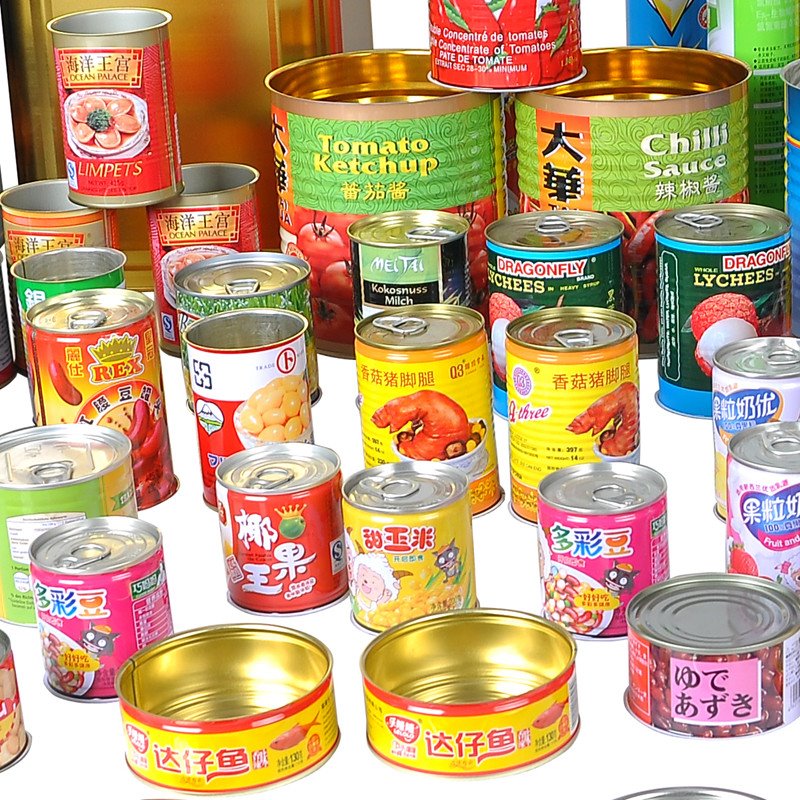
Minjia is a Metal Food Cans Manufacturer supplying Metal Food Cans for food processors, importers, wholesalers, and private-label brands. Our product range covers different can structures, sizes, materials, and coating options for packaging fruits, vegetables, seafood, meat, soups, and prepared foods.
We provide customized specifications based on food characteristics, filling processes, and packaging requirements.
-
![Metal Cans for Canning]() Metal Cans for CanningOur Metal Cans for Canning are the industry-standard solution for preserving food's freshness, flavor, and nutritional value. Designed for both commercial producers and serious home canners, these...read more
-
![Empty Vegetable Cans]() Empty Vegetable CansEmpty Vegetable Cans are steel food containers used by commercial vegetable processors for packaging and preserving processed vegetables. Featuring food-contact internal coatings and double-seamed...read more
-
![Metal Soup Cans]() Metal Soup CansMetal Soup Cans are tinplate steel containers for commercially packaged soups, broths, stocks and other liquid or semi-liquid foods. Featuring food-contact internal coatings and double-seamed...read more
-
![Metal Coffee Tin]() Metal Coffee TinMetal Coffee Tins are tinplate containers for packaging roasted coffee beans and ground coffee, featuring a welded metal body and fitted lid. Optional inner seals and one-way degassing valves...read more
-
![Sardine Tin Can]() Sardine Tin CanSardine Tin Cans are metal food containers made from tinplate or TFS, used for packaging sardines in oil, brine, tomato sauce and other seafood products. Available in different shapes, sizes and...read more
-
![Metal Food Cans for Luncheon Meat]() Metal Food Cans for Luncheon MeatMetal Food Cans for Luncheon Meat are tinplate containers with rectangular or round bodies, double-seamed metal ends and food-contact internal coatings for packaging luncheon meat and other...read more
-
![Metal Food Cans for Corned Beef]() Metal Food Cans for Corned BeefMetal Food Cans for Corned Beef are tinplate containers for packaging processed beef, including formed meat packed with or without brine. Featuring food-contact internal lacquer and double-seam...read more
-
![Condensed Milk Tin Can]() Condensed Milk Tin CanCondensed Milk Tin Cans are tinplate food packaging containers for sweetened condensed milk, intended for dairy manufacturers, food processing companies, canning factories and private-label...read more
-
![Milk Powder Tin Can]() Milk Powder Tin CanMilk Powder Tin Cans are tinplate containers for packaging infant formula, whole milk powder, and nutritional powder products. The metal body, sealed top closure, and reclosable plastic lid...read more
-
![Pet Food Tin Cans]() Pet Food Tin CansPet Food Tin Cans are metal containers for packaging wet cat food and dog food, including pâté, meat chunks, fish and gravy-based recipes. Made from tinplate with an internal food-contact coating,...read more
-
![Empty Cat Food Cans]() Empty Cat Food CansEmpty Cat Food Cans are metal food containers for wet cat food, including pâté, shredded meat, chunks in gravy and cat food toppers. The cans consist of a formed metal body, food-contact internal...read more
-
![Metal Tea Tin Cans]() Metal Tea Tin CansMetal Tea Tin Cans are metal containers for packaging loose-leaf tea, tea bags, herbal blends and other dry tea products. They feature a metal body, an odorless interior lacquer coating and...read more


Metal Food Can Types & Models
|
Can Type |
Structure & Features |
Typical Applications |
|
Three-Piece Metal Food Cans |
Cylindrical body with a welded side seam and two separate ends. |
Fruits, vegetables, soups, meat, and seafood. |
|
Two-Piece Metal Food Cans |
Integrated body and bottom formed from one metal sheet, with a separate top end. |
Selected solid, liquid, and semi-solid food products. |
|
Round Metal Food Cans |
Cylindrical shape available in different diameters and heights. |
Fruits, vegetables, beans, sauces, and meat. |
|
Rectangular & Oval Metal Food Cans |
Non-round shapes for specific product sizes and packing arrangements. |
Seafood and processed foods. |
|
Custom Metal Food Cans |
Customized structures, dimensions, coatings, printing, and end configurations. |
Food packaging projects with specific product or branding requirements. |
Canned Fruits
For peaches, pineapples, pears, and other fruits packed in syrup or juice. Can capacity and opening size should match fruit pieces and filling volume.
Canned Vegetables & Beans
For corn, peas, green beans, mushrooms, and other preserved vegetables. Can specifications should accommodate solid filling, brine addition, and thermal processing.
Canned Fish & Seafood
For tuna, sardines, mackerel, and other seafood. Round, oval, or rectangular cans can be selected according to fish size, packing arrangement, and oil or sauce content.
Canned Meat & Prepared Foods
For luncheon meat, processed meat, and ready-to-eat foods. Can shape, capacity, and opening format should suit product portions and filling requirements.
Soups, Sauces & Liquid Foods
For soups, tomato paste, sauces, and other liquid or semi-liquid products. Opening size, filling volume, headspace, and internal coating require confirmation.
Choose Metal Food Cans by Food Type & Processing Method
Food Acidity
Tomatoes and fruit preparations require coatings compatible with their acidity and formulation. Selection should consider pH, storage conditions, and corrosion test results.
Salt, Oil & Sulfur Content
Salted vegetables, oily seafood, and sulfur-containing foods may interact differently with metal surfaces. Recipe composition and storage conditions help determine the suitable coating system.
Filling & Thermal Processing
Hot filling, pasteurization, and retort sterilization involve different temperature and pressure conditions. Can bodies, coatings, and ends must suit the specified processing cycle.
Product Consistency & Filling Method
Whole fruits, fish portions, beans, sauces, and pastes have different filling requirements. Can opening size and dimensions should accommodate product loading and headspace.
Three-Piece Can Construction
Consists of a formed body, welded side seam, and two separate ends. Side seams and end seams require inspection to ensure package integrity.
Two-Piece Can Construction
Features an integrated body and bottom, eliminating the welded side seam. Forming specifications depend on can dimensions, material, and manufacturing process.
Double Seaming
Joins the can body flange with the end curl to form a sealed closure. Overlap, tightness, and seam dimensions should meet the applicable specifications.
Filling & Closure Configuration
Can dimensions and opening types affect filling, end feeding, and seaming operations. Confirm open-top supply and end compatibility with the existing closing equipment.
Tinplate (ETP)
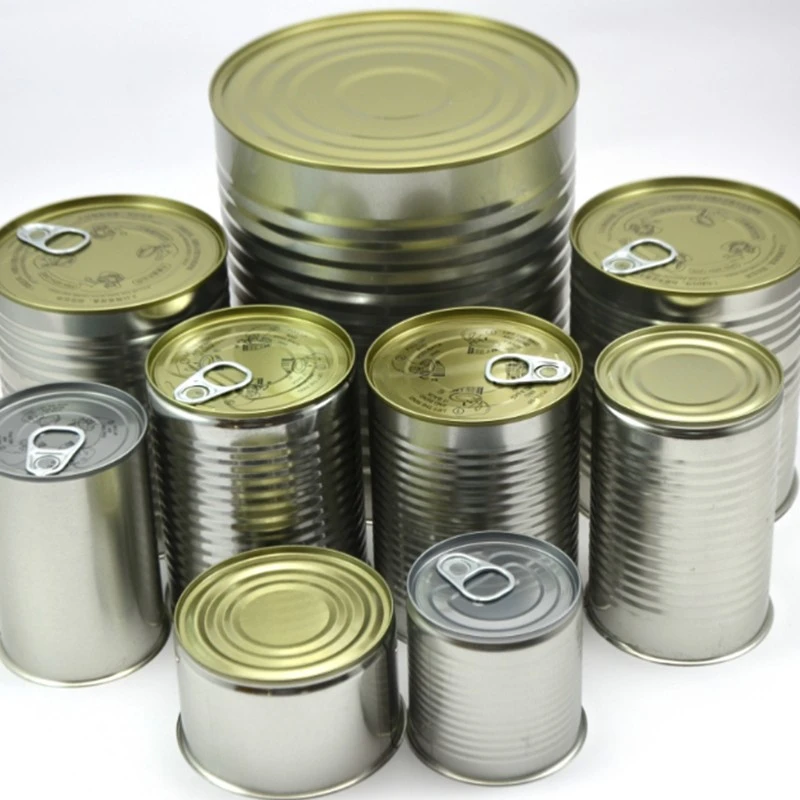
Steel coated with tin on both sides, commonly used for food can bodies and ends. Thickness and tin coating specifications depend on can structure and application.
Tin-Free Steel (TFS)
Steel with a chromium-based surface treatment instead of a tin coating. Used for selected can components with compatible coating and food-contact requirements.
Internal Protective Coatings
Separate the metal surface from food to help control corrosion and product interaction. Coating selection depends on acidity, salt, oil, sulfur content, and thermal processing.
External Coatings & Printing
External coatings protect the can surface and provide a base for printed graphics. Options include plain finishes, colored coatings, and custom branding.
Metal Food Can Compatibility Checklist for Filling & Seaming Lines
Can Dimensions
Confirm diameter, height, capacity, and tolerances against the operating range of filling and conveying equipment.
Can End & Seaming Specifications
Check end diameter, curl, can flange, and double-seam requirements. Can bodies and ends should be tested as a matched set.
Filling & Processing Conditions
Provide filling temperature, retort or pasteurization conditions, and processing pressure. These parameters help determine suitable can and coating specifications.
Sample & Line Trials
Test samples for dimensions, filling performance, and seam integrity on the actual production line before approving bulk orders.
Custom Metal Food Cans for Wholesale Orders
Custom Dimensions & Shapes
Specify diameter, height, capacity, and can shape according to the required filling volume. Non-standard sizes may require tooling and sample approval.
Material Thickness & Coatings
Specify material grade, thickness, and internal coating according to food and processing requirements. Final specifications require technical confirmation.
Custom Printing & Branding
Printed cans support customized graphics, brand colors, and product information. Print-ready artwork should be approved before production.
MOQ, Sampling & Lead Time
MOQ and lead time depend on can specifications, tooling, material availability, and printing requirements. Samples and technical drawings should be approved before mass production.
Manufacturing Process & Quality Control
Raw Material Inspection
Check incoming metal sheets or coils for material grade, thickness, and surface condition. Batch records support material traceability.
Can Body Forming & Assembly
Metal sheets are cut and formed according to can specifications. Three-piece cans require side-seam joining, while two-piece cans use drawing and forming processes.
Coating, Printing & Component Production
Coating and printing follow approved specifications. Can bodies and ends are produced or prepared to match the required dimensions and closure design.
Dimensional & Seaming Inspection
Check can diameter, height, flange, end dimensions, and coating condition. Double-seam measurements and leak tests verify closure integrity according to applicable specifications.
FAQ
As one of the most experienced metal food cans manufacturers and suppliers in China, we also support customized service. Please feel free to buy high-grade metal food cans made in China here from our factory. Quality products and reasonable price are available.