

Canning Lids Manufacturer for Custom Metal Packaging
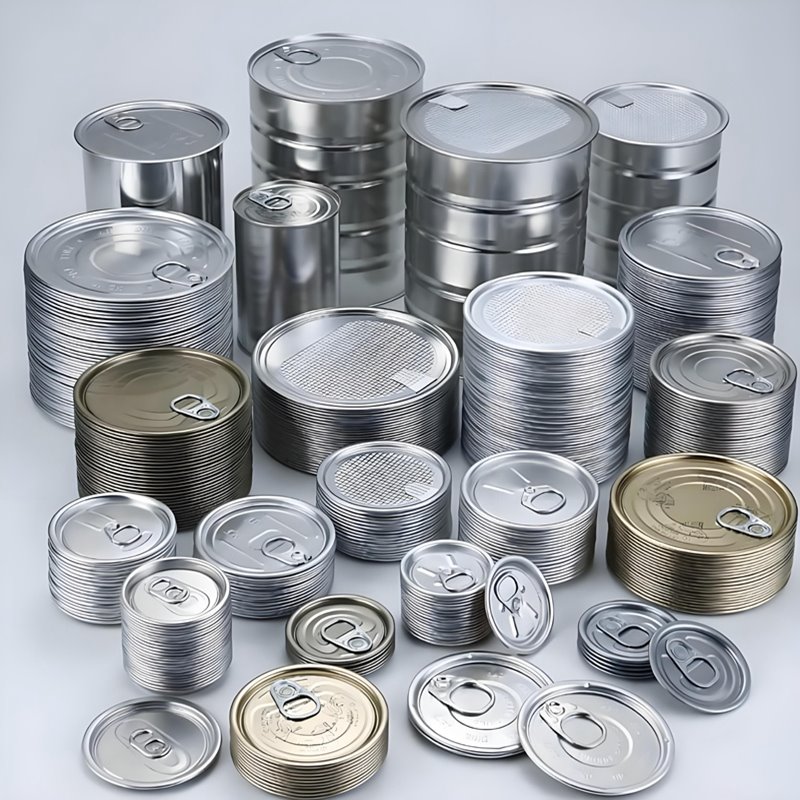
Minjia is a Canning Lids Manufacturer supplying metal closures for global food brands, wholesalers, and packaging manufacturers. Our Canning Lids range includes easy open ends, plain can lids, bottom lids, full aperture ends, twist-off caps, and Mason jar lids.
We offer customized sizes, materials, coatings, printing, and opening structures, supported by dedicated production lines and quality inspection.
-
![Easy Open Can Lids]() Easy Open Can LidsEasy Open Can Lids are metal can ends made from tinplate or TFS, featuring an integrated riveted pull tab and pre-scored opening panel. They are used by food can manufacturers and metal packaging...read more
-
![Twist-off Caps]() Twist-off CapsTwist-off Caps are metal closures fitted with internal lugs and sealing liners for compatible glass jars. Made from tinplate or TFS, they are available in different diameters, liner configurations...read more
-
![Plain Can Lids]() Plain Can LidsPlain Can Lids are non-opening tinplate or TFS metal ends used as bottom closures for three-piece cans, attached to welded can bodies through double seaming. They are supplied to food can...read more
-
![Tinplate Bottom Lid]() Tinplate Bottom LidTinplate Bottom Lids are stamped electrolytic tinplate (ETP) components used to form the sealed base of three-piece metal cans for food, aerosol and general line packaging. Their formed curl...read more
-
![Full Aperture End]() Full Aperture EndFull Aperture End is a metal easy-open can end featuring a scored opening panel and riveted pull tab for full-panel removal. It serves food can manufacturers, metal packaging suppliers and...read more
-
![Metal Mason Jar Lid]() Metal Mason Jar LidMetal Mason Jar Lids are two-piece metal closures consisting of a stamped tinplate flat lid and a threaded screw band, used with standard Mason-style glass jars. A perimeter sealing compound...read more
-
![Jam Jar Lids with Safety Button]() Jam Jar Lids with Safety ButtonJam Jar Lids with Safety Button are metal lug closures for glass food jars, featuring a central vacuum indicator and an internal sealing liner. The quarter-turn closure engages with the jar's...read more


Canning Lids Types & Specifications
|
Lid Type |
Target Container Type |
Diameter Range |
Material & Thickness Specification |
Primary Industrial Application |
|
Easy Open Ends (EOE) |
Three-piece metal cans |
50–153 mm |
Tinplate / TFS, 0.18–0.25 mm |
Canned fruits, vegetables, soups, and prepared meats |
|
Twist-off Caps (Lug Caps) |
Glass jars with lug finishes |
38–82 mm |
Electrolytic Tinplate (ETP), food-grade plastisol lining |
Sauces, honey, pickles, condiments, and baby food |
|
Plain Can Lids |
Three-piece metal cans |
52–189 mm |
Stamped ETP or TFS, without opening features |
Top and bottom ends for food and industrial cans |
|
Metal Mason Jar Lids |
Standard / Wide Mouth Mason jars |
70 mm / 86 mm |
Two-piece system: flat disc with gasket and screw band |
Home canning and dry food storage |
|
Full Aperture Ends (FAEs) |
Composite or metal containers |
65–126 mm |
Aluminum or tinplate with full-opening peel-off score line |
Snack foods, powdered milk, and coffee packaging |
|
Jam Jar Safety Button Lids |
Glass jam and preserve jars |
53–82 mm |
Lug cap with central vacuum indicator button |
Vacuum-packed jams, jellies, and fruit purees |
Note: Diameter ranges and material specifications are based on the supplied product data. Actual specifications should correspond to the individual lid design and production requirements.
Match the Container Type
Use double-seam ends for metal cans, lug-style caps for threaded glass jars, and matching two-piece lids for Mason jars. Check diameter and container finish dimensions.
Select the Opening Structure
Choose standard easy open ends for controlled access or full aperture ends for complete panel removal.
Consider Food Compatibility
Select internal epoxy-phenolic or polyester coatings based on food acidity, pH, and composition, especially for acidic products such as tomato paste.
Check Thermal Processing Conditions
Ensure sealing compounds, plastisol, or rubber gaskets withstand the required retort temperature and pressure without losing sealing integrity.
Match Equipment Specifications
Ensure lid diameters and curl profiles fit the can seaming machine or jar capping chuck, including applicable torque requirements.
Lid Structure & Sealing Technology
Double-Seam Construction
Can ends are joined to the body through mechanical seaming, where the end curl and body flange form a double seam. Curl and chuck dimensions affect seam tightness and sealing integrity.
Scored Opening Panel
Easy open ends use controlled score lines and pull-tab attachments. Score depth balances opening force with panel strength during handling and retort processing.
Plastisol Gasket Sealing
Twist-off caps use an internal plastisol sealing compound that softens under heat and compresses against the jar rim, filling small gaps to form a seal.
Vacuum Safety Button
Jam jar lids feature a central button that depresses as the contents cool and vacuum develops. Its position provides a visible and tactile indication of vacuum status.
Tinplate and TFS Substrates: Tinplate uses a steel base with a tin coating, while TFS uses a steel substrate with a chromium-based surface treatment. Both materials are used in metal food packaging.
Internal Protective Coatings: Food-contact lacquer separates the metal surface from the packaged product. Coating selection is based on food composition, acidity, salt content, and thermal processing conditions.
BPA-NI Coating Options: BPA-NI (Bisphenol A Non-Intent) coating systems are available for applicable metal packaging products, with supporting SGS and DANAK testing documentation listed by the company.
Food Safety Documentation: ISO 9001 and FSSC 22000 certifications, together with relevant coating and food-contact test reports, support manufacturing quality and compliance assessment.
Custom Canning Lids for Your Brand
|
Customization Category |
Available Options |
|
Diameter & Dimensions |
Lid diameter, curl profile, countersink depth, structural dimensions |
|
Material |
Tinplate, TFS |
|
Surface Printing |
Brand logo, product graphics, custom colors, printed tinplate |
|
External Finish |
Plain finish, printed finish, customized surface coating |
|
Internal Coating |
Food-contact lacquer, epoxy, organosol, BPA-NI coating options |
|
Opening Design |
Standard easy-open, full-aperture, customized score lines |
|
Pull-Tab Options |
Pull-tab configuration and attachment design |
|
Closure Structure |
Double-seam ends, lug arrangements, twist-off closures |
|
Safety Features |
Vacuum indicator button for compatible jar lids |
|
Sealing Components |
Plastisol sealing compound and other suitable sealing materials |
Manufacturing & Quality Control
Raw Material & Coating Inspection
Tinplate and TFS are tested for coating weight, steel hardness, lacquer adhesion, and corrosion resistance.
Automated In-Line Inspection
Dedicated production lines use optical and pneumatic systems to detect pinholes, coating defects, and dimensional deviations.
Laboratory & Retort Testing
In-house laboratories test materials and can ends. Sample lids undergo simulated retort temperature and pressure tests to assess coating and seal integrity.
Pre-Shipment Inspection
Finished lids are checked for dimensions and appearance. Inspection reports include color variation and dimensional tolerance records.
Why Choose Minjia as Your Canning Lids Supplier
25+ Years of Industry Experience: Established in 1997, Minjia has more than 25 years of experience in metal packaging manufacturing and international supply.
Integrated Metal Packaging Supply: Product range covers tinplate coils and sheets, coated and printed metal materials, can ends, metal cans, and various canning lids, supporting consolidated sourcing.
Direct Manufacturing Supply: Integrated production resources from metal coil processing to finished lid stamping help reduce intermediate sourcing costs and simplify procurement.
Established Export Network: Products are supplied to East Europe, the Middle East, South America, and Southeast Asia, with factory location and port access supporting international shipments.
Technical & Sample Support: Product samples, closure selection guidance, seaming setup assistance, and technical troubleshooting are available for customer production requirements.
fAQ
As one of the most experienced canning lids manufacturers and suppliers in China, we also support customized service. Please feel free to buy high-grade canning lids made in China here from our factory. Quality products and reasonable price are available.